Reflections from Meeting on the Mesa in Phoenix, US: Getting CAR-T to the tumor
Contact

Niklas Prager, CEO
+46 76 811 77 44

Nina Nornholm, Head of Communication
+46 708 550 356
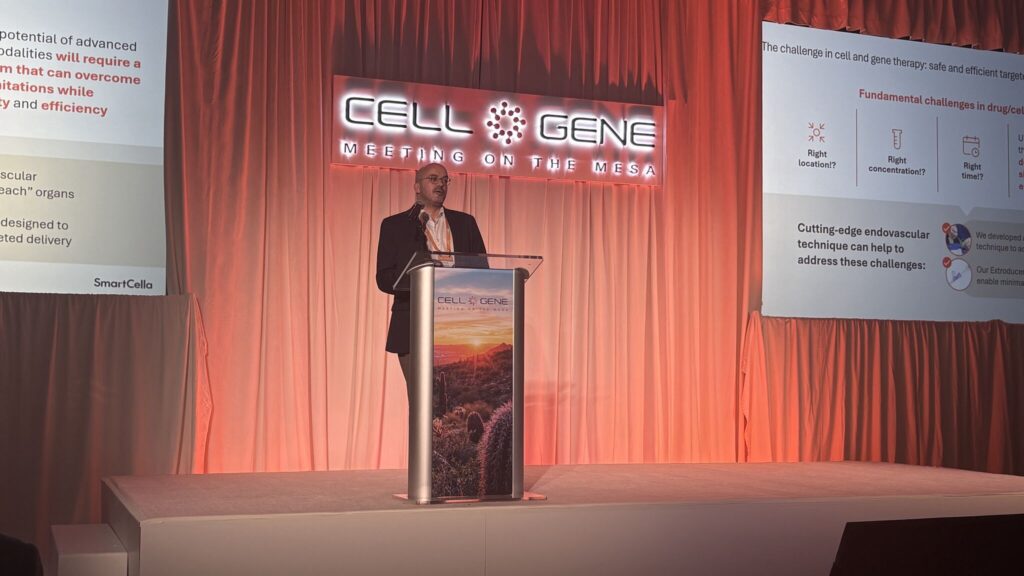
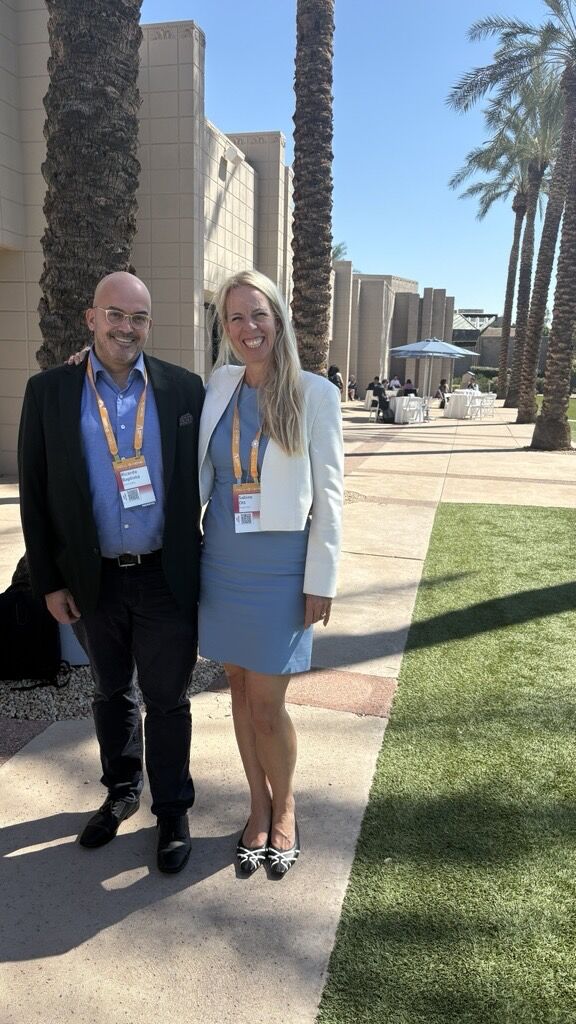
Early October, the cell and gene therapy community met at the Cell & Gene Meeting on the Mesa in Phoenix, with sessions on expanding access to CAR-T and on in vivo therapies. Our CTO Ricardo Baptista, PhD, presented SmartCella and the Extroducer® technology, and our CCO/CBO Sabine Ott, PhD, met with representatives across the community throughout the week.
A few themes ran through the agenda: expanding patient access to CAR-T while overcoming manufacturing, delivery and reimbursement challenges, safety, access and manufacturing in gene therapy, and in vivo therapies as one direction for the field.
“Access, manufacturing and cost came up again and again in Phoenix, and delivery plays into all three,” says CCO/CBO Sabine Ott, PhD. “From our perspective, it is highly relevant to ask whether new ways of delivering these therapies could, over time, also change how some of them are administered and what they cost. These are the conversations we want to continue with developers.”
CAR-T cell therapy has transformed outcomes for patients with hematological malignancies (1). In solid tumors, its efficacy has been limited by factors including antigen heterogeneity and the immunosuppressive tumor microenvironment (2). In vivo CAR-T follows a different path: it uses delivery systems such as lentiviral vectors and lipid nanoparticles to introduce CAR-encoding genetic material into the patient’s own T cells.
For solid tumors, locoregional delivery is one of the strategies discussed to maximize local therapeutic concentrations and reduce systemic toxicity (3). In a phase 1 trial in recurrent high-grade glioma, locoregional administration of CAR-T cells was feasible and well tolerated (4).
This is where our work comes in. The Extroducer® technology is a modality-agnostic endovascular delivery device designed for localized delivery to hard-to-reach organs, tumors and tissues. The Extroducer® technology is designed to be a minimally invasive device that accesses target tissue via the blood vessels, using an inverted Seldinger technique.
In oncology, the Extroducer® device is used in nEXT-GEM, a Phase I/IIa study at Karolinska University Hospital in which gemcitabine is delivered directly to inoperable, locally advanced pancreatic tumors.
In a preclinical study in the rabbit kidney, tumor cells injected with the device survived handling, preparation and device passage and formed proliferating grafts in 4 of 7 animals. In the same study, the device re-accessed the tumors in all 11 animals for intratumoral administration of a contrast agent, without complications (5). The study used tumor cells as a model; therapeutic cells such as T cells would need their own assessment.
Beyond oncology, partners use the Extroducer® technology in cardiac programs. In XyloCor Therapeutics’ Phase 2b EXACT-2 trial in refractory angina, the gene therapy XC001 is injected directly into the heart muscle in the catheterization lab using the Extroducer® device (6). Oloker Therapeutics, which develops cardiac cell therapies, and Heqet Therapeutics, which develops RNA-based therapies for cardiac regeneration, have also entered partnerships around the Extroducer® platform.
We are looking for partners who want to explore localized delivery for their programs, from CAR-T and other oncology approaches to cell, gene and RNA therapies for other organs. To learn more, contact SmartCella’s business development team at extroducer@smartcella.com
The Extroducer® device is FDA 510(k)-cleared “for use in the peripheral vasculature to infuse diagnostic and therapeutic solutions into the extravascular space, including in abdominal tissues associated with the peripheral vasculature” and is currently in clinical investigation for additional indications. Preclinical results may not be predictive of results in humans.
References
[1] Bot A, et al. In vivo chimeric antigen receptor (CAR)-T cell therapy. Nat Rev Drug Discov. 2026;25(2):116-137. doi:10.1038/s41573-025-01291-5
[2] Du B, et al. CAR-T therapy in solid tumors. Cancer Cell. 2025;43(4):665-679. doi:10.1016/j.ccell.2025.03.019
[3] Li J, et al. Optimizing CAR T cell therapy for solid tumours: a clinical perspective. Nat Rev Clin Oncol. 2025;22(12):953-968. doi:10.1038/s41571-025-01075-1
[4] Brown CE, et al. Locoregional delivery of IL-13Rα2-targeting CAR-T cells in recurrent high-grade glioma: a phase 1 trial. Nat Med. 2024;30(4):1001-1012. doi:10.1038/s41591-024-02875-1
[5] Lövljung V, et al. Trans-vessel wall cell transplantation, engraftment, and tumor access in the VX2 rabbit model. Cell Transplant. 2025;34. doi:10.1177/09636897251313678
[6] XyloCor Therapeutics. First patient dosed in Phase 2b EXACT-2 trial of XC001 (release, 10 Jul 2025), NCT07048808. biospace.com

Let’s pioneer the future of targeted therapies together